

For the Press
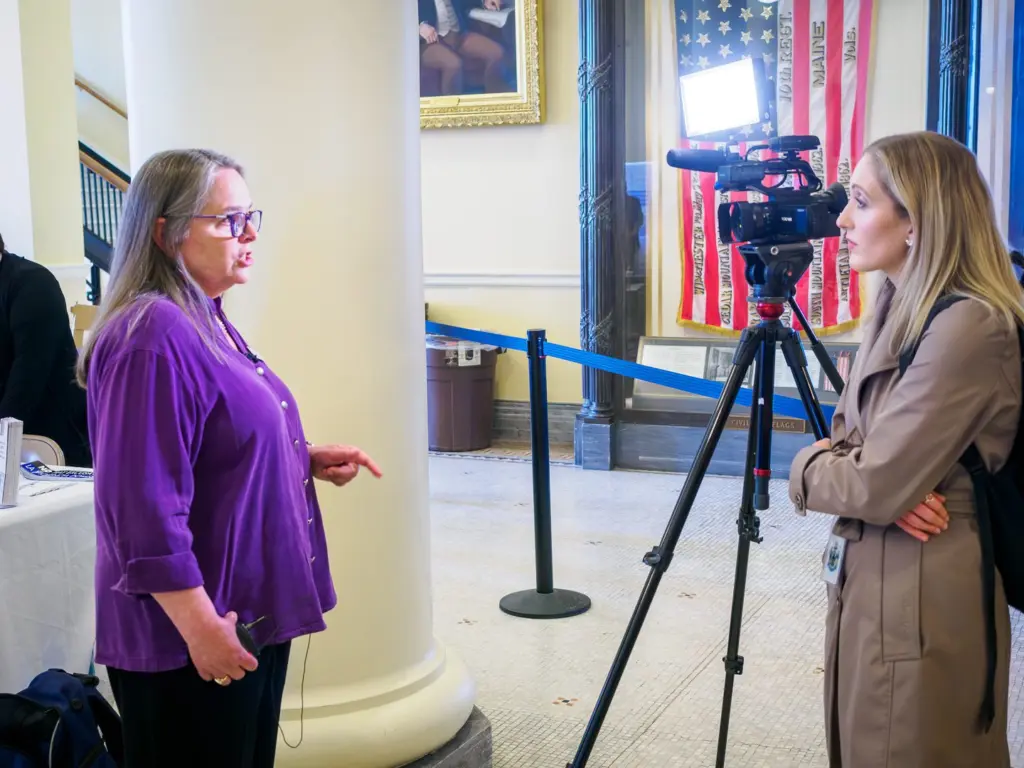
MCEDV is committed to supporting the media in accurate, respectful, and survivor-centered reporting on all matters related to domestic violence. Reporting plays a key role in shaping the public’s understanding of this frequently misunderstood public health and safety issue.
For all press inquiries, contact:
Katie Matzell, MCEDV Communications & Development Coordinator
[email protected]
(207) 430-3577
Best Practices for Survivor-Centered Reporting
Do no harm
When covering stories related to domestic violence, consider survivors’ vulnerabilities. Ask about safety and privacy concerns. Be willing to work with survivors who may not be able to publicly share their full names or images – the risks are real. Follow the person’s lead about how they prefer to be labeled; some people prefer the term “survivor,” while others prefer “victim” – there is no one set standard (though there may be legal contexts in which the term “victim” is most appropriately applied.) Don’t push for details about the abuse they don’t want to share.
Use accountable language
Use active voice and specific details, rather than euphemisms or passive language that depicts abuse as a thing that just “exists.” Consider the difference in these headlines: “Police say Searsmont deaths were domestic violence homicide-suicide,” versus “Police say Searsmont man killed ex-partner, then himself.” One obscures important information about the situation, while the other accurately describes the event and who is reporting it.
Avoid tropes and distortions
Domestic abuse and violence is complicated and often misunderstood. Focusing on common tropes – for example, “red flags to avoid” – falls short in helping our communities understand the facts of the issue. Repeating common justifications for abuse – for example, framing domestic violence as a mental health issue – reinforces inaccurate information that is widely held by the public. A good place to start is ensuring you and your colleagues understand the root causes of domestic abuse and violence. Learn more here.
Always include resource information
Every story about abuse will be seen both by people experiencing it and people perpetrating it. Listing the information for Maine’s 24/7 domestic violence helpline provides an important resource for survivors and those who care about them, who may be seeing your story and wondering what they can do next.
Rely on experts
It is important to provide context for individual stories of domestic violence, particularly in the wake of a high-profile crime like homicide. MCEDV and our members are ideally placed to provide contextual information about the range of survivor experience and efforts to address abuse. We can also often suggest other key sources to inform the story.
For more best practices re: reporting on domestic abuse and violence, see the National Network to End Domestic Violence’s Media Guide.
About MCEDV
The Maine Coalition to End Domestic Violence (MCEDV) works to end intimate partner and family abuse in all its forms, including coercive control, physical violence, sexual abuse, stalking, financial exploitation, and sex trafficking.
MCEDV provides support for our membership and state-level partners as they respond to abuse, creates frameworks to inform the public’s understanding about the issue, and advocates for laws and policies that will keep survivors safe and hold abusive people to account.
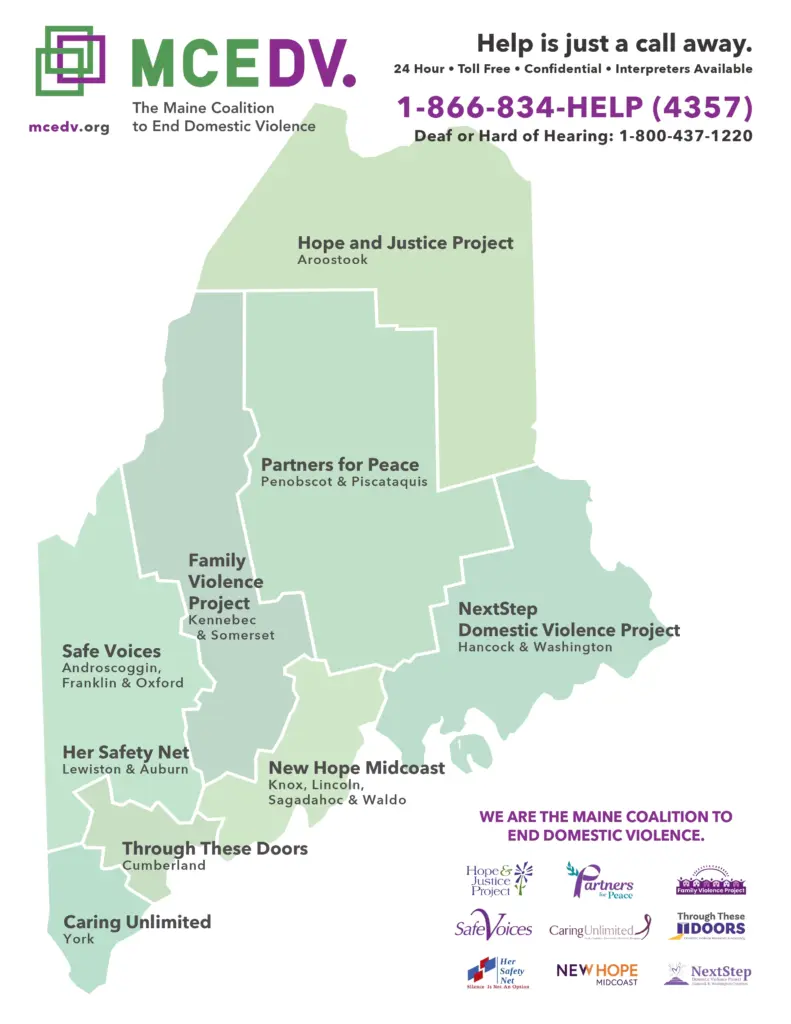
MCEDV is statewide, supporting eight regional Domestic Violence Resource Centers with outreach locations in all 16 counties, and culturally specific services for immigrant, refugee, asylum-seeking and BIPOC communities in the Lewiston/Auburn area.
Key Statistics re: DV in Maine
- MCEDV’s network works with approximately 14,000 people – including 12,000 survivors – each year.
- In 2025, Maine’s Domestic Violence Resource Centers fielded over 18,000 calls on their crisis helplines.
- In 2025, member advocates spent nearly 40,000 hours working with people experiencing DV.
- On September 10, 2025, 8 out of 8 (100%) identified domestic violence programs in Maine participated in the National Network to End Domestic Violence Counts Survey: a one-day, unduplicated count of adults and children seeking domestic violence services. Here are the figures they provided during the 24-hour survey period.
- 539 Victims Served – receiving services like emergency sheltering, transitional housing, hotels, motels, transportation, housing support, legal support, therapy, and more.
- 90 Hotline Contacts Received – averaging nearly 4 contacts per hour.
- 11 People Educated. Trainings for the public addressed topics like domestic violence prevention and early intervention.
- 71 Unmet Requests for Services. Programs were unable to meet 71 requests for help because they lacked sufficient resources, funding, and/or staffing. Approximately 65% of these unmet requests were for emergency shelter, hotels, motels, transitional housing, and other housing.
Citation: National Network to End Domestic Violence (2026). 20th Annual Domestic Violence Counts Report. Washington, DC. Retrieved from: NNEDV.org/DVCounts.
Additional Resources
- Publications & Reports – Published information about Maine’s response to abuse and violence
- Media Guide: Resources for Reporters, editors, and media professionals – National Network to End Domestic Violence
- Preventive Press: A Guide for Journalists on Responsible Reporting on Domestic Violence – Violence Free Minnesota
- Journalist Playbook – Helping journalists cover domestic violence with depth and care
- How a trauma-informed approach to domestic violence stories puts survivors first – USC Annenberg Center for Health Journalism